

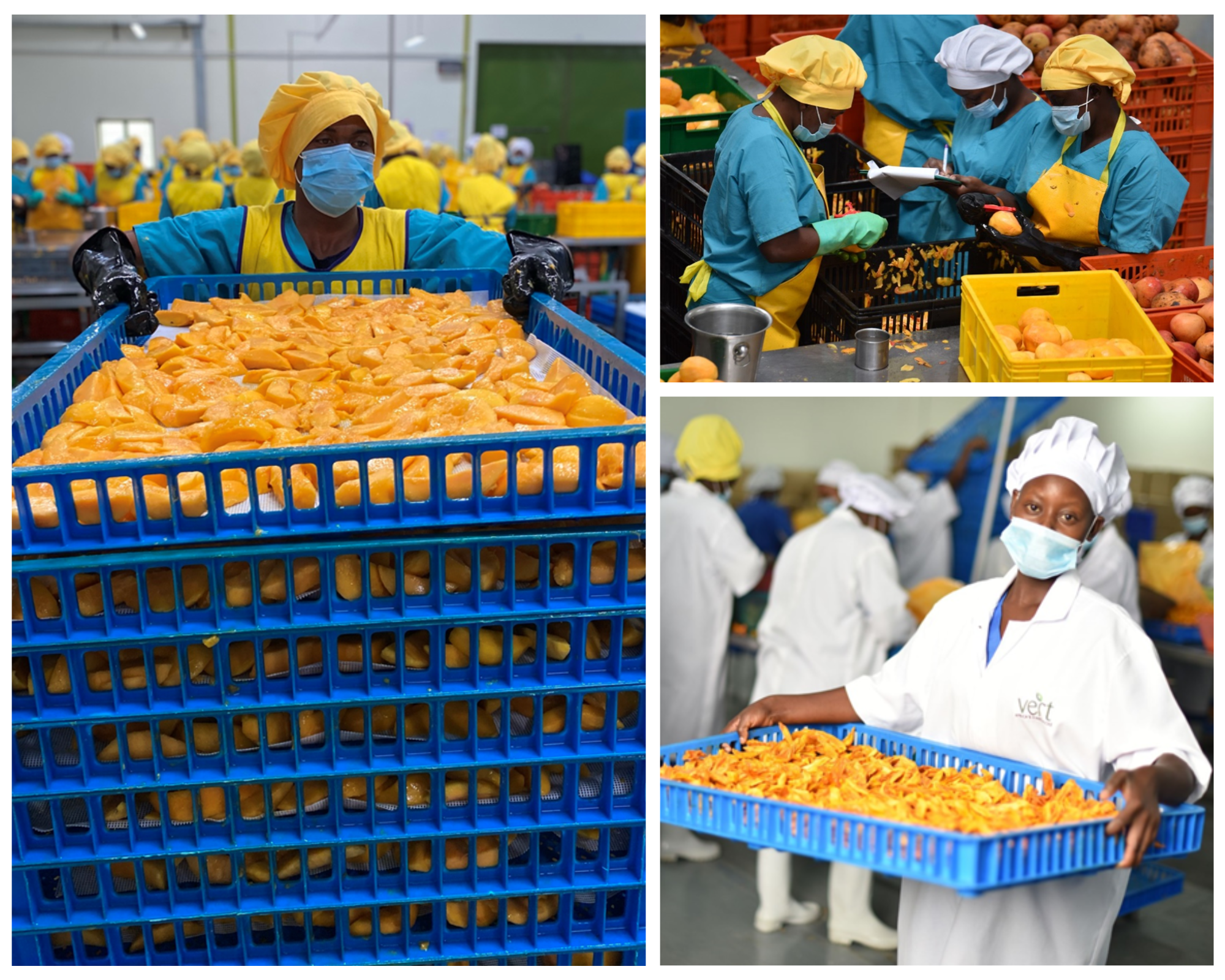
On World Agriculture Day, it’s important to celebrate innovative approaches within the agricultural sector that not only promote sustainable farming practices but also empower communities, particularly women and youth. One such case is Vert Limited, a Kenyan private company established in 2000, focusing on food processing, packing, and the export of fruits and vegetables. Through the AgriFI Challenge Fund, Vert has embarked on a journey to scale its mango pulping operations by introducing a drying facility, sourcing mangoes from 3,000 smallholder farmers, and implementing various initiatives aimed at promoting gender equality and youth participation in the mango value chain.
Overcoming Gender Barriers in Agriculture
Vert Limited’s initiatives have been ground-breaking in overcoming gender barriers in the mango value chain. A gender impact study conducted by Imani Development in January 2024 highlighted Vert’s strategic approaches to integrate women and youth into agricultural value chains, ensuring access to credit, participation in leadership, quality training, and premium markets. These efforts were guided by two pivotal questions:
- What happens when women are integrated in agricultural value chains through training in good agricultural practices?
- What strategies have been most effective in accelerating women’s empowerment and youth inclusion? And how?
Key Achievements and Impact
- Drying Facility and Employment Opportunities:
The establishment of a drying unit has significantly increased the uptake of mangoes from smallholder farmers and boosted employment for young women in the factory. Women now comprise 80% of the factory workforce, enjoying a conducive work environment with career growth opportunities.
- Training and Certification:
3000 farmers have been trained in Global GAP (Good Agricultural Practices) and organic farming standards, leading to improved mango quality and access to premium markets. This not only promotes climate-smart practices, but also empowers farmers through enhanced production knowledge and income.
- Co-operative Engagement:
Farmer cooperatives have been instrumental in promoting women’s leadership and inclusion in the mango value chain. Leadership by women at the cooperative level has ensured better access and understanding of women’s needs and challenges, creating a supportive environment for female farmers.
- Access to Credit and Advances:
Vert has provided ‘in-kind advances’ through extension services, harvesting, transportation, and marketing, addressing financial barriers faced by farmers and enhancing their production capabilities.
- Enhanced Relationships:
Vert’s engagement model through cooperatives has fostered trust and accountability, ensuring timely payments and guaranteed uptake of mangoes, which has significantly improved women’s incomes and livelihoods.
Conclusion
Vert Limited’s interventions in the mango value chain provide a robust model for gender inclusion and youth empowerment in agriculture. This study demonstrates the importance of integrating gender considerations into value chains, not only for social equity, but also for enhancing productivity and sustainability in agriculture.
On World Agriculture Day, let Vert Limited’s journey inspire us to recognize the potential of inclusive and sustainable agricultural practices in transforming lives and fostering resilient communities. By supporting gender equality and youth empowerment in agriculture, we can cultivate a future where everyone has the opportunity to thrive.
About Kayo
 Kayo Asiko is a research assistant based in Nairobi, Kenya but works remotely with the team in the Cape Town office. She graduated from the University of Kent with an Upper Second Class Degree in Law and has enrolled for her post-graduate degree at the London School of Economics. Kayo supports senior consultants on several projects through research, reporting, and stakeholder engagement. Her areas of focus are regional integration, socio-economic development, and environmental social governance.