

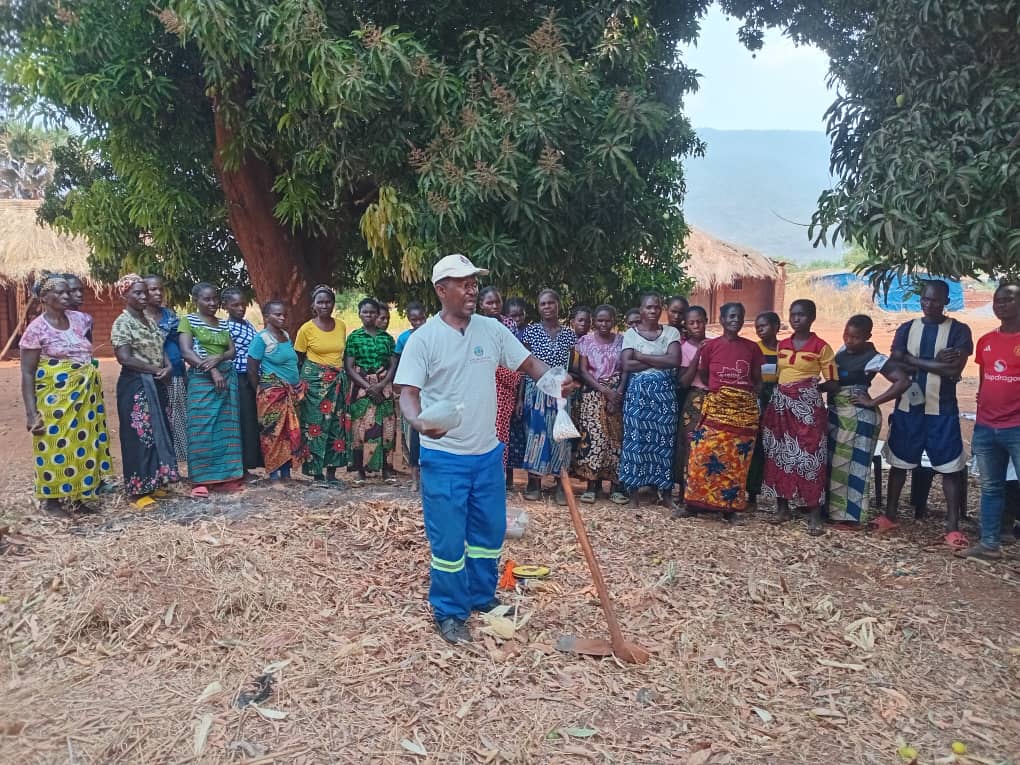
Women’s rice production cooperative in Chipwa, Zambia. Photo credit: Jeston Lunda
Along the shores of Lake Tanganyika—one of the world’s most important freshwater ecosystems—fishing is more than a livelihood. It sustains nearly half of rural jobs and provides a critical source of food and income for millions.
Sadly, this vital system is under growing strain. Overfishing, climate change, and land degradation are weakening fish stocks and reducing agricultural productivity, leaving communities increasingly vulnerable.
In Zambia, the FISH4ACP Alternative Livelihoods component is helping communities in Mpulungu and Nsumbu districts diversify incomes, strengthen resilience, and ease pressure on fisheries—while building sustainable, market-driven local economies. This effort forms part of FISH4ACP, an initiative of the Organisation of African, Caribbean and Pacific States (OACPS) that works to make fisheries and aquaculture value chains across Africa, the Caribbean, and the Pacific more sustainable. In Zambia, the focus is on enhancing the productivity and sustainability of the small pelagics value chain in Lake Tanganyika, contributing to poverty reduction, improved food security, and the protection of aquatic life. FISH4ACP is implemented by FAO and partners, with funding from the European Union (EU) and Germany’s Federal Ministry for Economic Cooperation and Development (BMZ). The FISH4ACP Alternative Livelihoods component in Zambia is being delivered by Imani Development.
A Project Rooted in Impact
Since launching in May 2025, the project has reached 15 cooperatives across eight rural communities (Mbete, Kasakalawe, Munjela, Musende, Chipwa, Chibwensolo, Kapembwa, and Kalomo), directly engaging 32 cooperative leaders and lead farmers. The project directly reached 405 households, with 58% women participation.
Beyond training, the project has invested in critical productive infrastructure, including 8 greenhouse seedling tunnels, 3 rice mills, 4 treadle irrigation pumps and 3 solar-powered cold storage hubs worth USD 140,000.
Creating Real Alternatives: Livelihoods That Work
At the heart of the project is the creation of practical, scalable livelihood opportunities that reduce dependency on fishing while increasing household incomes.
1. Rice Production and Value Addition
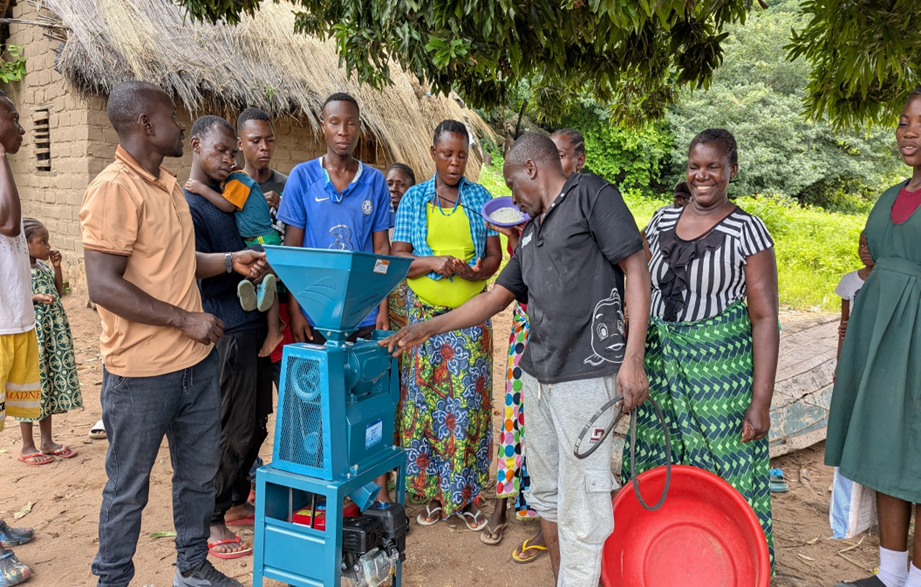
Rice farming cooperative receives new rice mill in Chipwa village. Photo credit: Jeston Lunda
Rice has emerged as a flagship enterprise, transformed through improved seed adoption, milling and packaging, collective storage and marketing.
Hands-on lead farmer training sessions were designed to reframe rice cultivation as a business venture. Farmers compared the returns from low-quality, farmer-saved seed versus certified improved seed, and assessed the profitability of selling paddy directly against adding value through milling. The aim was to equip farmers with smarter production and marketing choices that maximize profitability.
By pairing improved seed with milling and strategically timing sales for peak season, farmers are now achieving markedly higher profits.
2. Greenhouse Seedling Production
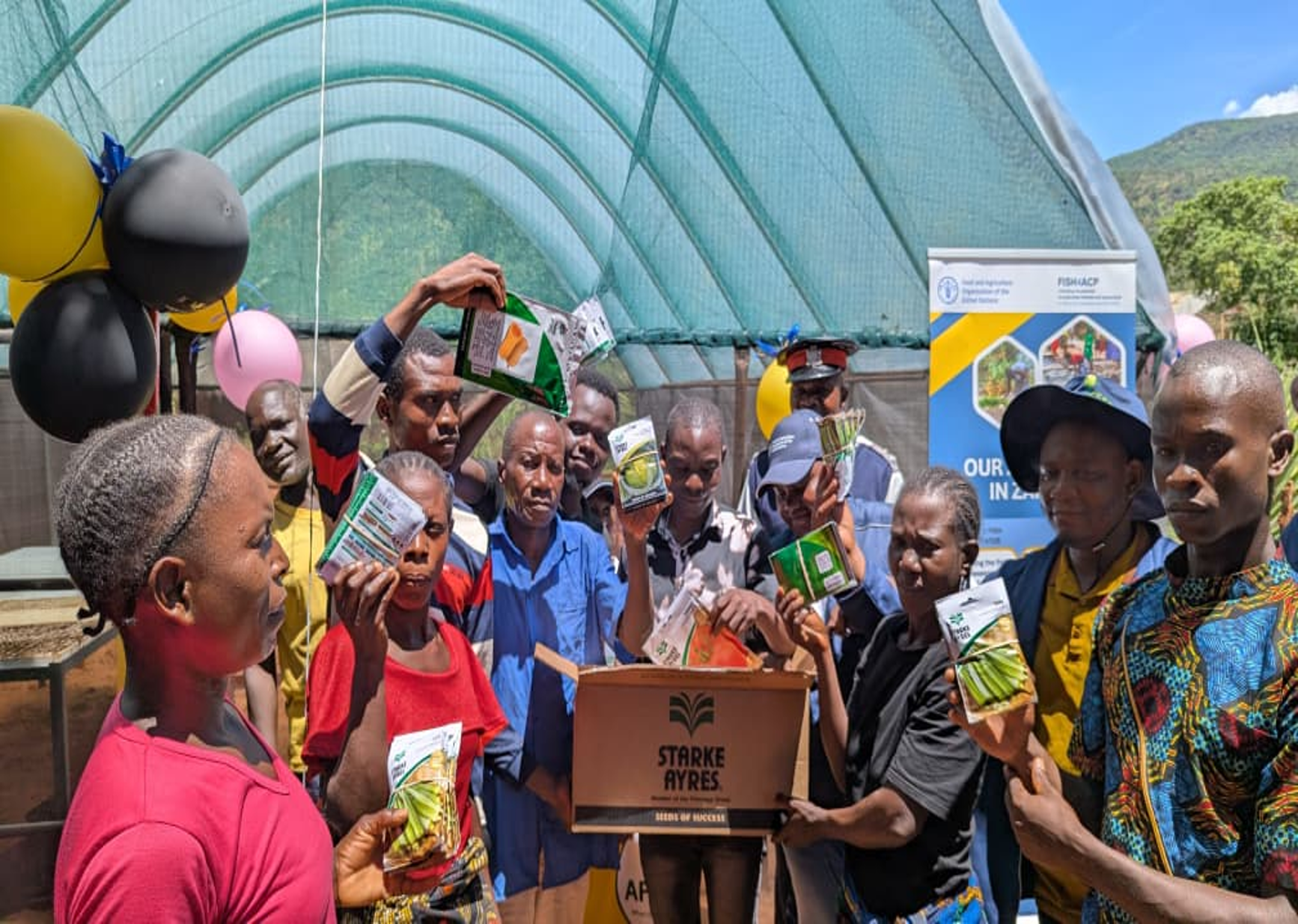
Seed distribution during greenhouse launch in Mpulungu. Photo credit: Jeston Lunda
Eight newly established greenhouse tunnels are driving seedling production as a high-potential business. Operated by lead farmers, they supply quality seedlings to horticultural groups while connecting them to lucrative local markets. Importantly, this model is driving women’s participation, positioning them at the centre of production, management, and marketing.
This model offers clear advantages: it requires minimal land, provides opportunities for year-round income, delivers high-value outputs, and meets strong demand from farmers, NGOs, and institutions.
3. Cold Storage and Fish Value Chains
By supporting the establishment of community-managed cold chain facilities in Mpulungu and Nsumbu, the project is strengthening local capacity to preserve fish and other perishables. Three newly installed solar-powered cold rooms, run as fee-based services accessible to members and non-members, are transforming the local fishing economy. By ensuring reliable cold storage, they safeguard fish quality, extend shelf-life, and enable communities to time sales strategically when market prices are most advantageous.
Managed and owned by the cooperative, the cold room business model guarantees transparency and equitable benefits for all members. Beyond preserving fish quality, these facilities generate revenue while creating local jobs in management, handling, and logistics.
4. Irrigation and Climate-Smart Agriculture
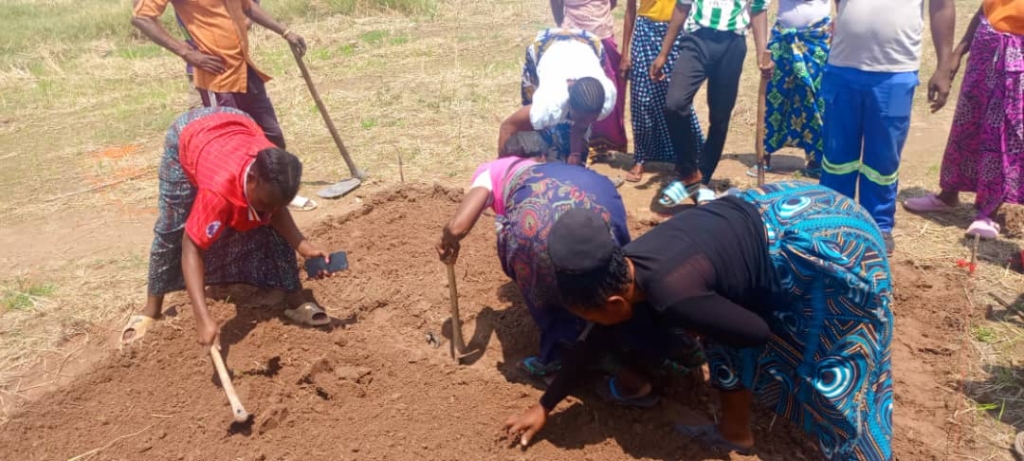
Farmers learning climate-smart agriculture techniques in Mbete village. Photo credit: Richard Kalyata
Working alongside the Ministry of Agriculture, the project rolled out conservation agriculture trainings that equipped farmers with practical skills in climate-smart farming. Farmers received practical, hands-on instruction in sustainable land management, covering soil conservation, minimum tillage, mulching, crop rotation, and nursery establishment techniques.
By adopting treadle irrigation pumps alongside climate-smart agriculture practices, farmers are building resilience against climate variability. These innovations allow crop production beyond the rainy season, improve soil health, and enhance long-term productivity—ensuring that livelihoods are not only diversified but also climate-resilient.
Governance: The Foundation of Sustainability
Although new infrastructure and training have opened strong opportunities, weak governance continues to pose the greatest threat to success. Cooperatives acknowledged that unclear leadership roles, inadequate record-keeping, and limited transparency in financial management were undermining progress.
To address these challenges, the project—working with the Ministry of Small and Medium Enterprise Development and the Ministry of Agriculture—has committed to strengthening cooperative governance through formal registration, targeted training, and ongoing oversight. Furthermore, the project is bolstering governance by strengthening leadership and accountability structures, introducing systematic record-keeping, developing clear by-laws, and establishing transparent asset ownership agreements.
As one participant put it: “If we don’t fix governance, even these good projects will fail. We need leadership that is committed to work for the people.”
Sustainability Beyond the Project
Sustainability is not an afterthought—it is being built into every aspect of the intervention.
1. A Shift That Changes Everything: From Activities to Businesses
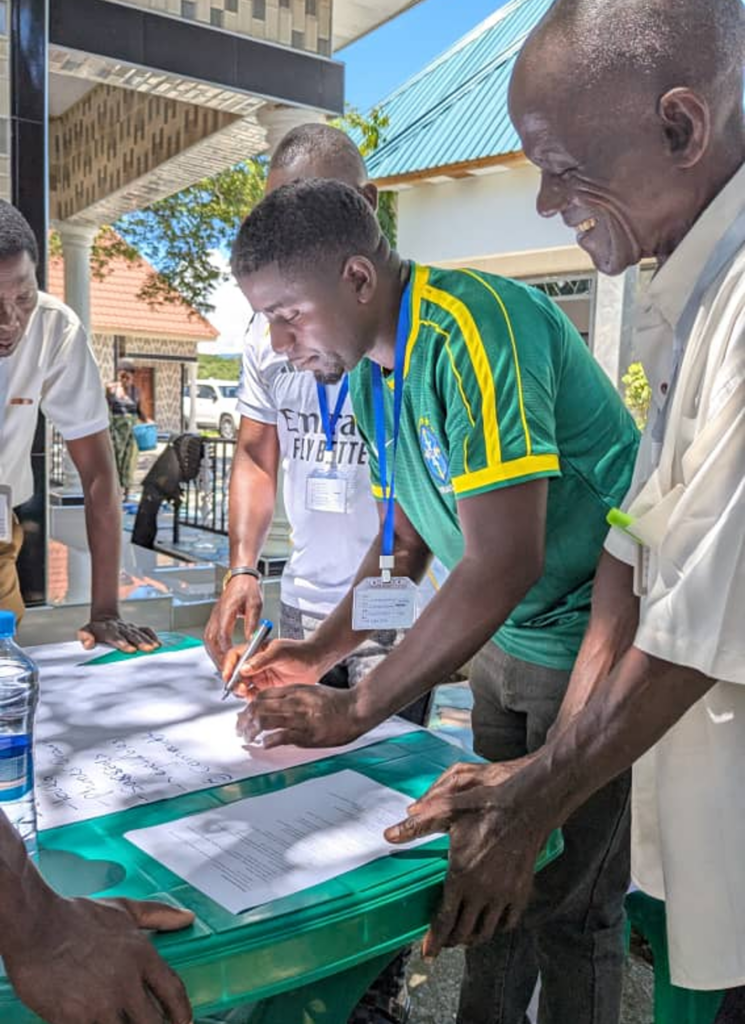
Cooperative and lead farmer training in Mpulungu District. Photo credit: Jeston Lunda
Through targeted training of cooperative leaders, the project is helping communities transition from subsistence practices to sustainable, business-oriented livelihoods—reducing pressure on fisheries while creating diversified income streams.
One of the most significant achievements has been mindset transformation among beneficiary communities. Farmers and fishers who once viewed their work as routine survival activities are now approaching them as business ventures—making decisions based on costs, profits, timing, and markets.
This shift is fundamental: it moves communities from subsistence to informed, profit-driven decision-making—a prerequisite for long-term sustainability.
One lead farmer expressed that: “We have been doing these activities for some time, but this is the first time we are understanding them as a business. Now things are making sense.”
2. Strong Institutional Partnerships
Sustaining progress beyond the project depends on strong partnerships with government and market actors. The Ministry of Agriculture is driving extension services and climate-smart practices, while the Department of Fisheries supports diversification and reduced fishing pressure. The SME Ministry is reinforcing cooperative governance and compliance, ensuring accountability at community level. At the same time, private sector partners such as Mazingo Investment are opening new commercial opportunities in rice and horticulture, linking farmers directly to profitable markets. Together, these collaborations are laying the foundation for resilient livelihoods that will thrive long after the project ends.
A Model for Inclusive, Resilient Livelihoods
FISH4ACP is more than a livelihood initiative—it is reshaping how communities perceive farming, fishing, and enterprise. By pairing practical business models with stronger governance and institutional support, the project is laying the foundation for resilient, inclusive, and sustainable livelihoods that will endure well beyond its lifespan. Key achievements to date include diversified livelihood options across agriculture, fisheries, and horticulture; significant investment in productive assets and community infrastructure; a clear shift toward business-oriented cooperatives; strong participation and empowerment of women; and practical systems established to ensure sustainability beyond project support. Most importantly, communities are beginning to take ownership of their future—transitioning from dependency to resilient, self-sustaining local economies.
About Chido
 Chido Myambo is the Marketing and Communications Officer at Imani Development. Chido is responsible for content creation and management of all corporate communications. She enjoys writing about climate smart solutions, women’s empowerment and sustainable development issues. She holds a Master’s in Development Finance with the University of Stellenbosch Business School.